










































Assessment of Media Development in Ethiopia
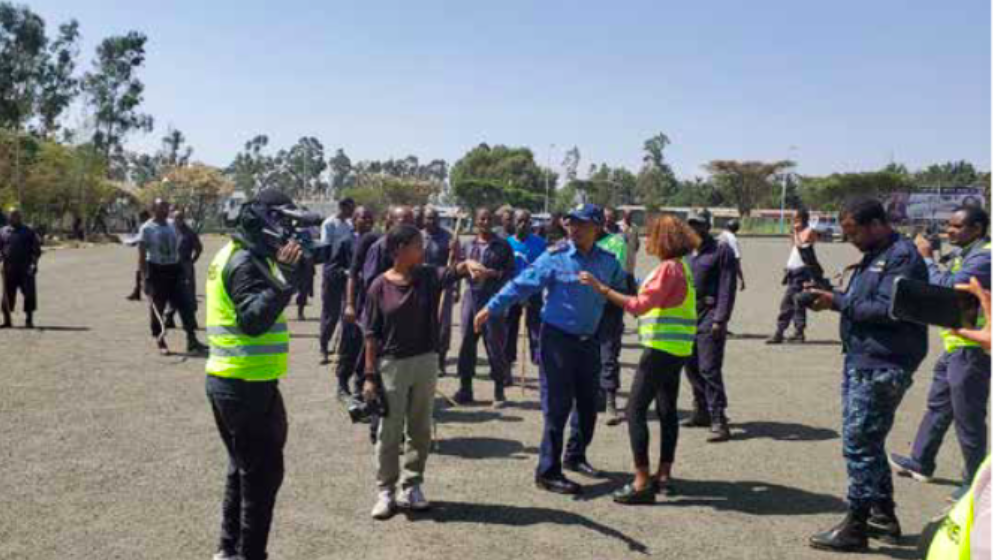
"Freedom of expression is a fundamental human right and an enabler of other rights....However, this right will only be realized when there exists an enabling environment where citizens have information to exercise their freedom and when journalists can freely report on issues of public concern, without fear of attack from powerful bodies."
This report, published by the United Nations Educational, Scientific and Cultural Organization (UNESCO), offers insight into the state of the media in Ethiopia. It seeks to present an overview of the development of the media and media freedom in Ethiopia following political reforms introduced by the government since 2018 and unpacks how media regulations, associations, networks, training institutes, ownership structure, technologies, and other factors have impacted on press freedom, diversity, and plurality of the media.
The study is based on the UNESCO Media Development Indicators (MDI) framework (see Related Summaries, below), which was drawn up to gauge a wide spectrum of media development and performance, with the ultimate objective of determining specific needs, guiding the formulation of media-related policies, and improving the targeting of media development. The research is based primarily on qualitative data collected from relevant legal and other documents and from in-depth interviews with over 100 key media stakeholders in Ethiopia, as well as on additional quantitative research.
In accordance with the MDI framework, the report presents the findings across five categories and their respective indicators. The categories are as follows:
Category 1: A system of regulation conducive to freedom of expression, pluralism, and diversity of the media - explores the system of media regulation in place in Ethiopia and whether it is conducive to freedom of expression, pluralism, and diversity of the media.
Category 2: Plurality and diversity of media, a level economic playing field, and transparency of ownership - examines the extent of media plurality and diversity in the country, including the issue of economic viability and media ownership.
Category 3: Media as a platform for democratic discourse - examines how and to what extent the Ethiopian media serves as a platform for democratic discourse, looking at how the media deals with diversity and what role the public broadcasting service plays. Self-regulation of the media, public trust in the media, and safety of journalists are also covered under this category.
Category 4: Professional capacity building and supporting institutions that underpin freedom of expression, pluralism, and diversity - looks at the professional capacity of journalists in the country and the availability of support structures like training institutions and professional bodies or efforts by media owners or government to enable media practitioners to do the best possible job.
Category 5: Infrastructural capacity is sufficient to support independent and pluralist media - deals with the information and communication technology (ICT) infrastructure and its use by the media in Ethiopia.
Overall, the study indicates "that in its current condition, the Ethiopian media - both offline and online - needs strong support and collaboration among the state, local and international organizations, journalism associations, educational institutes, and other players. With a population of more than 110 million people, with great diversity in languages, politics, culture, societal values, and other aspects, the availability of diverse media and plural views in Ethiopia is vital for peaceful co-existence, democracy and development."
Discussions under each of the five categories conclude with a list of recommendations specific to that area. The following is a selection of recommendations as highlighted in the executive summary of the report:
- The government of Ethiopia should continue working on revising legal provisions in the different laws to align with the Ethiopian Constitution, Article 29, which guarantees freedom of expression and access to information, and should commit to enforce them to create a media-enabling environment for journalists and the media to exercise their rights, without fear of repercussion.
- The government should put in place and implement a comprehensive national media policy that guarantees freedom of expression, access to information, and editorial independence and that ensures a practice free from both direct censorship and self-censorship in accordance to the provision in the country's constitution and internationally accepted standards. Such policies should also address the need to provide a wide variety of support to the media, including subsidies and tax breaks in imported goods used in the media sector.
- The government should prioritise journalism training by supporting middle-level and in-service training in order to create a pool of media trainers and improve the standard of journalism in Ethiopia. Higher education institutions that provide journalism education should improve the quality of the training and create more specialised journalism and media education, and they should be equipped with technical facilities, teaching materials, and skilled trainers.
- The government should create policy to bring about fairness and transparency in how government advertising is distributed across public and commercial media organisations. Such policies should also address the need to manage the influence of advertising on media content.
- The government and the Ethiopia media sector as a whole could make more effort to ensure they serve diverse people living in the country in terms of both giving voice to their perspectives and providing them with the information they need and equal business opportunities, regardless of gender, political orientation, and ethnicity. To this end, both national and regional broadcasters should be transformed into truer public service broadcasters having a mandate to serve the public interest, which is protected in practice against both political and commercial interference.
- Initiating an independent public funding body that could be managed and controlled by all stakeholders has become imperative to raise funds and allocate for the local media to financially strengthen their capacity and support them to sustain themselves.
- Appointment of media governing bodies, including boards of directors and management bodies of public broadcasters and media regulatory institutions, could be more transparent and involve the public, media actors, and civil society organisations (CSOs). The process could be entirely overseen by the House of People's Representatives at both federal and regional levels.
- All media organisations in Ethiopia should formulate a gender equality policy to promote gender balance and safety of women journalists in the media. The Media Council, CSOs, and the government should support the implementation of such policies across the media industry.
- The government and CSOs should join efforts in providing capacity building and technical and financial support to strengthen the operations of community media organisations, as well as to establish more media in the country.
- The government, CSOs, and the Ethiopian Broadcasting Authority should support the Media Council, as it will be instrumental in defending journalists' rights and exercise self-regulation, which will help end unjustified administrative measures and maintain journalistic professional standards.
- The government should not only prioritise the safety of journalists and protect media workers from threats, intimidation, harassment, physical assault, and imprisonment in line with the Target/Indicator 16.10.1 of the UN Sustainable Development Goals (SDGs) but also take effective legal and other measures to investigate, prosecute, and punish perpetrators of attacks against journalists and other media practitioners and ensure that victims have access to effective remedies.
- The government, journalism schools, CSOs, and others should design and implement a media and information literacy education programme for all, which will help strengthen public participation in the media, promote informed and ethical consumption of media content, and encourage active engagement in making the media responsive to people's needs. In addition, they should not only support the existing training institutions but also initiate middle-level and in-service training centres in the country.
- The government, CSOs, and media development agencies should support the digitalisation of media operations by improving ICT facilities in media across the country, which should focus on ensuring sustainability of media operations. In addition, the government should initiate projects that can critically review the digital migration policy and strategy of the country and also provide sufficient ICT equipment to "public" broadcasting services all over the country.
UNESCO website on March 11 2024. Image credit: UNESCO
- Log in to post comments